Clear Answers Before You Begin
Starting orthodontic treatment comes with questions. This FAQ covers the most common topics patients ask about before, during, and after treatment.
What diagnostic records are needed before starting treatment?
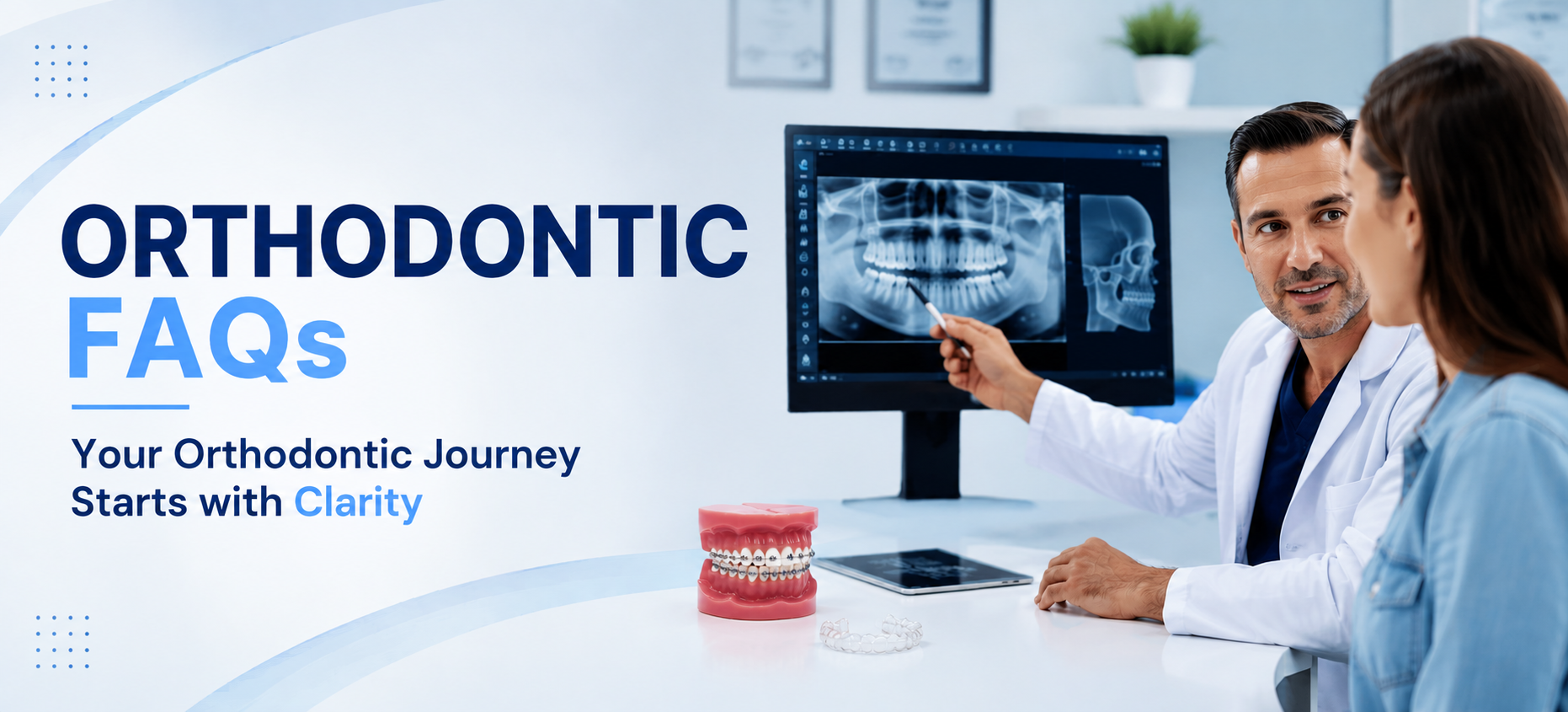
• Digital study models
• Panoramic and cephalometric X-rays
• Clinical photographs
At what age should children see an orthodontist?
An orthodontic evaluation is recommended around age 7 to detect early bite or jaw concerns.
Why is early orthodontic evaluation important?
It helps detect developing issues early and guide growth, often reducing the need for more complex
treatment later.
What is Phase 1 orthodontic treatment?
Early treatment used to correct jaw growth or bite problems before all permanent teeth erupt.
What is Phase 2 treatment?
Treatment after all permanent teeth erupt, focused on alignment and achieving a stable bite.
How do braces or aligners move teeth?
They apply gentle, controlled forces to gradually move teeth into proper position.
Will I need teeth extractions for orthodontic treatment?
Not always. It depends on crowding, bite, and facial profile. We prioritize conservative approaches
whenever possible.
Can orthodontic treatment improve facial profile?
Yes. In some cases, it can improve lip position, smile balance, and facial harmony.
Will I need to wear retainers after treatment?
Yes. Retainers maintain your results and prevent teeth from shifting.
How long do I need to wear retainers?
Full-time at first, then night-time wear for long-term stability.
Why do teeth shift after orthodontic treatment?
Natural changes over time can cause movement. Retainers help maintain alignment.
Do wisdom teeth cause crowding?
No. There is no proven direct link.
Will wisdom teeth need to be removed?
Only if they are impacted or causing problems.
Can braces cause TMJ problems?
No. Orthodontic treatment does not cause TMJ disorders.
Can mouth breathing affect orthodontic treatment?
Yes. It can influence jaw development and alignment.
Does tongue posture affect teeth alignment?
Yes. Incorrect posture can affect tooth position over time.
Have more questions?
Our team, led by Dr. George Bardawil, is here to guide you. Schedule your consultation for a personalized
assessment and a clear treatment plan.